
 Orders ship from the USA, Orders of $25 or more qualify for FREE Shipping in the USA
GMRS vs FRS vs MURS vs Amateur vs PLMR Radio Guide
BTECH RADIO SERVICE GUIDE
Which radio service is right for you?
Compare GMRS, FRS, MURS, Amateur, and professional radio by licensing, users, system type, and everyday use—then get a short list of BTECH radios that fit.
60-SECOND RADIO FINDER
Three easy choices. One clear radio path.
Choose who is talking, the licensing path you will use, and the system you need. We will recommend one service, explain the tradeoff, and show matching BTECH radios.
- 1Users
- 2License
- 3System
- ✓Match
Who needs to communicate?
Pick the group closest to your real users.
What licensing path works?
Choose what your users and organization can support.
What system do you need?
Start with the hardware path. You can refine the exact model next.
GMRS
Why it fits
Honest limitation
A strong alternative:
Why not the other services?
MATCHED BTECH RADIOS
Best radios for your setup.
Only current, priced, in-stock products that fit the selected hardware path are shown.
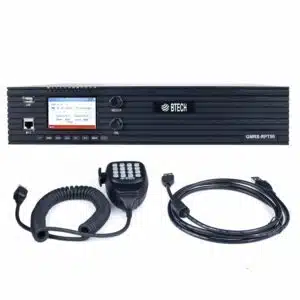
BTECH GMRS-RPT50 50W GMRS Repeater with Built-In Duplexer and Auto-ID
A true 24/7 50-watt repeater with built-in duplexer and CW Auto ID.
$1,499.89
BTECH GMRS-50PRO IP54 Weatherproof 50-Watt GMRS
A 50-watt mobile/base platform for vehicles, property, and repeater access.
$284.89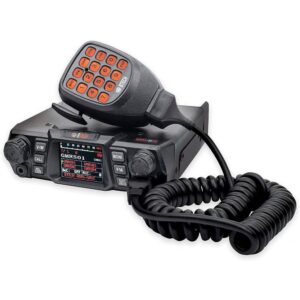
BTECH GMRS-50V2 50W 256 Fully Customizable Channels Mobile GMRS Two-Way Radio.
A proven 50-watt mobile radio for vehicles, base stations, and repeater access.
$219.89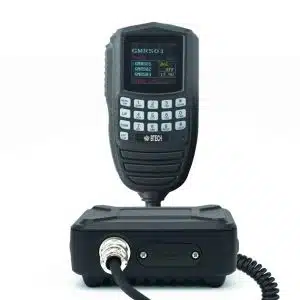
BTECH GMRS-20V2 20W IP67 GMRS Mobile Radio
A compact 20-watt GMRS mobile for tighter installations and repeater access.
$109.89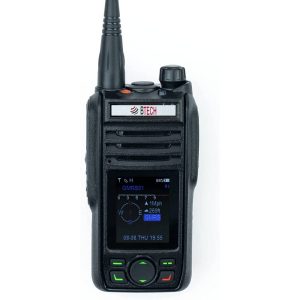
BTECH GMRS-PRO IP67 Submersible Radio, Bluetooth, App Programmable GMRS Mobile Radio
IP67, GPS, Bluetooth, and app programming for demanding handheld and repeater use.
$154.89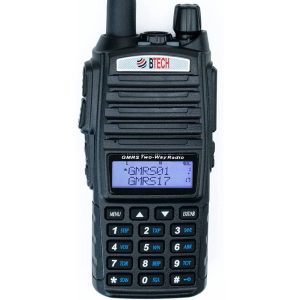
BTECH GMRS-V2 Fully Customizable GMRS Radio
Straightforward repeater-ready GMRS with customizable channels.
$44.89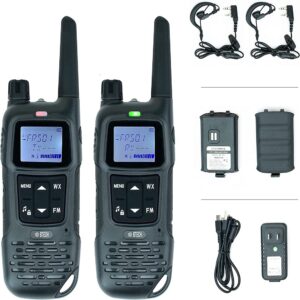
BTECH FRS-A1 All-Purpose Walkie Talkies
A complete two-radio kit for family, events, and ready-to-use communication.
Price range: $30.00 through $42.89
BTECH FRS-B1 Business Radio Walkie Talkies — 2-Pack
USB-C charging and team-focused features for simple work communication.
$39.89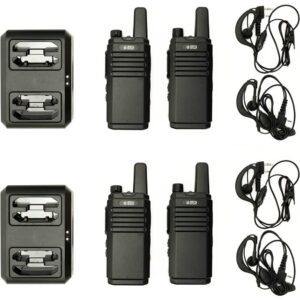
BTECH FRS-B1 4 Pack FRS Business, Adult Walkie Talkies
A practical multi-radio package for events and small teams.
$74.89
BTECH MURS-V2 200 Fully Customizable Channels MURS Two-Way Radio
Two-watt VHF MURS for handheld use—or a compliant vehicle setup when paired with the tuned UT-72G antenna.
$44.89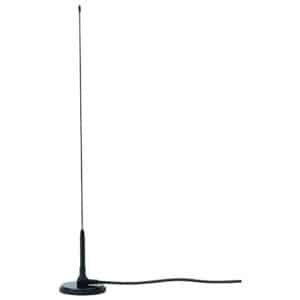
Nagoya UT-72G
A tuned magnetic-mount antenna that turns the MURS-V2 into a practical license-free vehicle setup.
$34.89
BTECH UV-50PRO 50W Dual Band Mobile Ham Radio
50-watt dual-band mobile operation for vehicles, base stations, and repeater access.
$329.89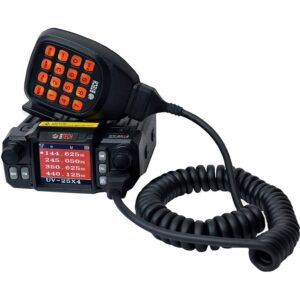
BTECH UV-25X4 (Second Generation) Tri Band 25W Mobile Radio
A quad-band 25-watt mobile platform for licensed operators who value band flexibility.
$124.89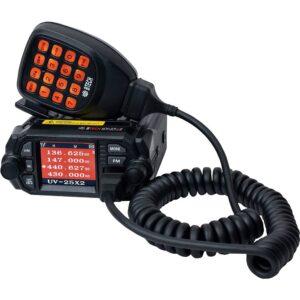
BTECH UV-25X2 (Second Generation) Dual Band 25W Mobile Radio
A compact 25-watt dual-band mobile for licensed vehicle and base operation.
$124.89
BAOFENG BF-F8HP PRO 10W Tri Band Two-Way Radio, IP54, 1000 Channels, GPS, Aviation RX, USB-C
High-power tri-band handheld with GPS and USB-C for licensed operators.
$62.89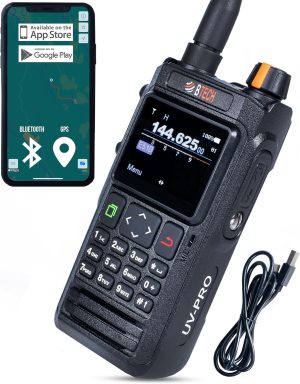
BTECH UV-PRO GPS, Bluetooth & APRS Dual-Band Radio
IP67, GPS, Bluetooth, and app programming in a versatile dual-band platform.
$164.89
BTECH DA-7X2 Digital & Analog Dual Band Two-Way Radio
Digital and analog operation for users who need an advanced repeater-capable handheld.
$299.89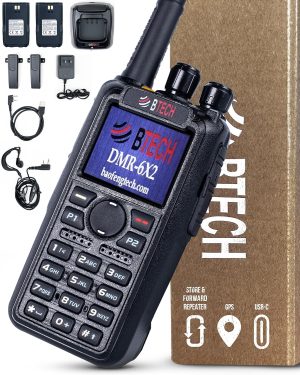
BTECH DMR-6X2 DMR & Analog Dual Band Two-Way Radio
Digital and analog capability for managed handheld, vehicle-with-external-antenna, and repeater-connected deployments.
$189.89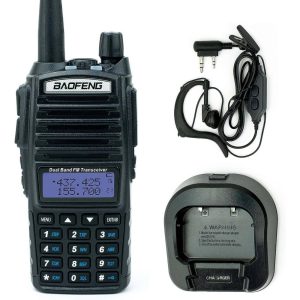
BaoFeng UV-82C
A commercial dual-PTT endpoint that can move from handheld use to an authorized vehicle setup with a properly tuned external antenna.
$55.89No exact current BTECH model matches this hardware path. Change the system choice or browse the full service collection.
SIDE-BY-SIDE
The practical differences.
Do not choose by advertised mileage. Terrain, antenna placement, equipment class, and repeater infrastructure matter more.
| Question | GMRS | FRS | MURS | Amateur | Professional / PLMR |
|---|---|---|---|---|---|
| Who is it for? | Individual licensee and qualifying family | Individuals, families, groups, and businesses | Individuals and businesses | Licensed individual operators | Eligible businesses and organizations |
| Authorization | FCC individual license; no exam | Licensed by rule | Licensed by rule | FCC license and exam | FCC authorization; coordination or system planning may apply |
| Repeaters? | Yes | No | No | Yes | When authorized and properly configured |
| Best fit | Family, outdoors, property, repeater use | Easy short-range handheld communication | Short-range VHF personal or business use | Technical flexibility, hobby, public service | Managed operational communications |
| Main limitation | Individual/family licensing model | Handheld-only class and no repeaters | Five channels, low power, no repeaters | Exam and operating rules; not routine business traffic | Licensing and system administration |
| Next step | How to get your $35 GMRS license → | Choose an FRS radio | Choose a MURS radio | Choose a license class | Plan the authorized system |
GMRSLICENSE · NO EXAM
- Who
- Individual licensee and qualifying family
- Repeaters
- Yes
- Best fit
- Family, outdoors, property, and repeater use
- Watch-out
- Uses an individual/family licensing model
- Next step
- How to get your $35 GMRS license →
FRSLICENSE-FREE BY RULE
- Who
- Individuals, families, groups, and businesses
- Repeaters
- No
- Best fit
- Easy short-range handheld communication
- Watch-out
- Handheld-only equipment class; no repeaters
MURSLICENSE-FREE BY RULE
- Who
- Individuals and businesses
- Repeaters
- No
- Best fit
- Short-range VHF personal or business use
- Watch-out
- Five channels, low power, and no repeaters
Amateur RadioLICENSE + EXAM
- Who
- Licensed individual operators
- Repeaters
- Yes
- Best fit
- Technical flexibility, hobby, and public service
- Watch-out
- Exam and operating rules; not routine business traffic
Professional / PLMRORGANIZATION AUTHORIZATION
- Who
- Eligible businesses and organizations
- Repeaters
- When authorized and properly configured
- Best fit
- Managed operational communications
- Watch-out
- Licensing and system administration
WHO CHOOSES EACH SERVICE?
Five services. Five different fits.
There is no preselected winner. Compare each option at equal weight, starting with who will use it, what it makes easy, and what you must accept.
GMRS
The broad personal-radio choice: handhelds for everyday use, mobile and base radios for stronger installations, and repeaters when a high site can open the path.How to get your $35 GMRS license →
- No examination
- Handheld, mobile, base, and repeater options
- One individual license covers qualifying family
- FCC individual license required
- Not a general workforce license
- Shared UHF channels may be busy
FRS
Choose FRS when simplicity matters most: compliant handhelds, familiar shared channels, and no individual license application.
- No application or exam
- Simple and widely compatible
- Personal or business communication
- Handheld and integral-antenna class
- 0.5W or 2W ERP by channel
- No repeaters
MURS
A focused five-channel VHF option for personal or business teams that want license-free operation and, where useful, a compliant external antenna.
- No application or exam
- Personal or business use
- External antennas permitted within the rules
- 2W transmitter limit
- Only five shared channels
- No repeaters
Amateur Radio
The widest technical playground for licensed operators who want multiple bands, modes, repeaters, and experimentation.
- Broad band and mode choices
- Repeaters and experimentation
- Large technical community
- Each operator needs a license and exam
- Not for routine business traffic
- More learning and operating rules
Professional / PLMR
Purpose-built systems for organizations that need managed channels, coordinated coverage, scalable sites, or professional administration.
- Organization-managed system
- Coordinated and licensed channels
- Scalable sites and infrastructure
- Licensing or coordination
- System planning and administration
- Higher setup complexity
FAST ANSWERS BEFORE YOU BUY
Get to the right radio faster.
Start with the decision closest to yours, then open any practical answer below. No jargon maze and no inflated mileage promises.
Should I buy GMRS or FRS radios?
Choose FRS when you want the simplest ready-to-use handhelds with no individual license application. Choose GMRS when a licensed individual and qualifying family need more equipment choices, mobile or base radios, or repeater capability. Neither label guarantees more range—the actual radios, antennas, terrain, and placement still decide the path. See the current $35 GMRS license steps →
What should a business or organization use?
For straightforward short-range teams, compare compliant FRS and MURS equipment. For organization-managed channels, larger sites, repeaters, or coordinated operations, review an authorized PLMR system. GMRS uses an individual and qualifying-family licensing model; it is not a general workforce license.
Will radios cover my warehouse, hotel, farm, or large property?
There is no useful answer from square footage alone. Measure the farthest actual radio path, count floors between users, and identify concrete, steel racks, machinery, hills, or dense trees. Use the Range Lab’s building planner for a starting estimate, then test the hardest locations before a larger deployment.
Do I need a repeater?
Direct radio-to-radio operation is usually the simpler choice when users are close and the path is reasonably clear. A properly authorized repeater becomes valuable when a higher site can see areas that field radios cannot reach directly. GMRS, Amateur, and authorized PLMR systems can support repeaters; FRS and MURS cannot.
Which radio service has the longest range?
No service guarantees a mileage number. Antenna height, terrain, structures, interference, equipment limits, and repeater infrastructure matter more than the service name. Compare the services for licensing and operating fit, then use the Range Lab to model the actual path.
Should I choose VHF or UHF?
VHF is often a strong choice for open outdoor, rural, and some large-facility paths. UHF is common around buildings and supports compact antennas. Neither band defeats poor placement, heavy construction, or blocked terrain, so choose based on the environment and the equipment you are authorized to use.
Does a 50-watt radio go ten times farther than a 5-watt radio?
No. Ten times the transmitter power adds 10 dB to the link budget; it does not create ten times the distance. Extra power can strengthen a marginal path, but antenna height, feed-line loss, receiver performance, and obstructions frequently matter more.
Will a better or higher antenna help more than additional power?
Often, yes. A more efficient antenna placed higher and in the clear can improve both transmitted and received signals, while added transmitter power helps only one direction. Equipment and service rules may restrict antenna type, height, or effective radiated power, so use a legal antenna system designed for the selected frequencies.
Why do radio boxes advertise 20, 30, or 50 miles?
Those figures usually describe unusually favorable elevated line-of-sight geometry—such as hilltop to valley—not ordinary handheld use inside a neighborhood, warehouse, vehicle, or forest. Treat them as best-case demonstrations, not expected everyday coverage.
Does digital radio automatically have more range?
No. Digital can preserve clear audio deeper into a weakening path, while analog becomes progressively noisier. Digital also reaches a sharper failure point. The RF path, antennas, receiver performance, and system design still determine usable coverage.