
 Orders ship from the USA, Orders of $25 or more qualify for FREE Shipping in the USA
Two-Way Radio Range Calculator
BTECH TWO-WAY RADIO RANGE CALCULATOR
How far will your two-way radios really reach?
Model terrain, buildings, antenna height, power, VHF or UHF, site elevation, and repeaters—then share the exact scenario or shop radios for the selected service.
INTERACTIVE RANGE ESTIMATOR
See what your radios can realistically cover.
New to radio? Pick the situation closest to yours and get a useful answer. Know RF? Switch to Pro controls for power, antennas, height, elevation, band, and repeater geometry.
Using FRS or MURS inside a building?
Choose the closest facility, enter the farthest radio-to-radio path, and count only the floors physically between the two users.
Indoor planner
Use the longest actual communication path—not square footage. Racks, concrete walls, machinery, elevators, and electrical noise can create dead spots even when the overall distance fits.
Fine-tune radios, antennas, height & elevation Professional controls for both sides of the radio path.
Radio A
First user, vehicle, or base station
Outbound side
Radio B
The station Radio A must reach
Return side
Repeater site
The elevated station creates two separate radio paths and a coverage footprint.
Coverage center
Handheld · 5 W1,205 ft antenna altitude
Repeater · 50 W1,700 ft antenna altitude
Handheld · 5 W1,205 ft antenna altitude
Use this more cautious band for purchase and deployment planning.
Possible with a cleaner-than-typical path; do not treat this as promised coverage.
Geometry only—before terrain, clutter, noise, antenna inefficiency, or fading.
More power cannot transmit through a blocked radio horizon.
The planned indoor path fits inside the selected facility with usable margin.
MATCHED TO THIS ESTIMATE
Radios that fit this exact setup.
Start with the equipment type, service, and operating path you just modeled.
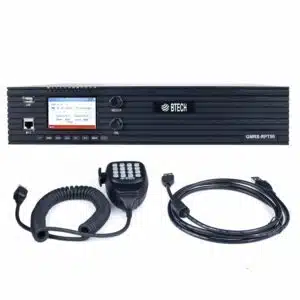
BTECH GMRS-RPT50 50W GMRS Repeater with Built-In Duplexer and Auto-ID
A true 24/7 50-watt repeater with built-in duplexer and CW Auto ID.
$1,499.89
BTECH GMRS-50PRO IP54 Weatherproof 50-Watt GMRS
A 50-watt mobile/base platform for vehicles, property, and repeater access.
$284.89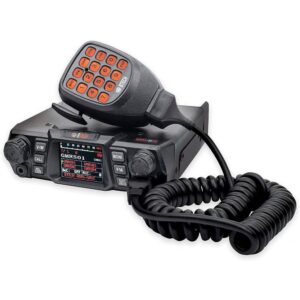
BTECH GMRS-50V2 50W 256 Fully Customizable Channels Mobile GMRS Two-Way Radio.
A proven 50-watt mobile radio for vehicles, base stations, and repeater access.
$219.89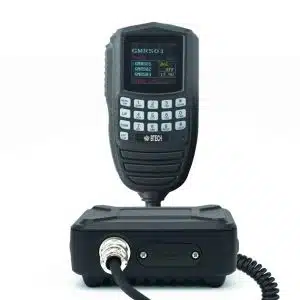
BTECH GMRS-20V2 20W IP67 GMRS Mobile Radio
A compact 20-watt GMRS mobile for tighter installations and repeater access.
$109.89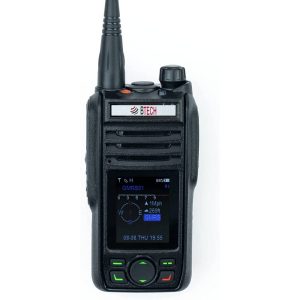
BTECH GMRS-PRO IP67 Submersible Radio, Bluetooth, App Programmable GMRS Mobile Radio
IP67, GPS, Bluetooth, and app programming for demanding handheld and repeater use.
$154.89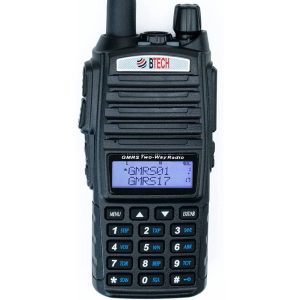
BTECH GMRS-V2 Fully Customizable GMRS Radio
Straightforward repeater-ready GMRS with customizable channels.
$44.89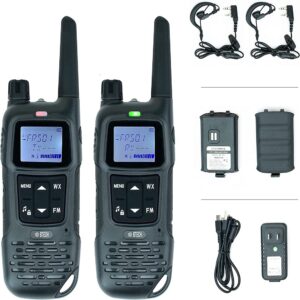
BTECH FRS-A1 All-Purpose Walkie Talkies
A complete two-radio kit for family, events, and ready-to-use communication.
Price range: $30.00 through $42.89
BTECH FRS-B1 Business Radio Walkie Talkies — 2-Pack
USB-C charging and team-focused features for simple work communication.
$39.89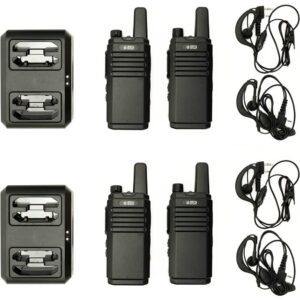
BTECH FRS-B1 4 Pack FRS Business, Adult Walkie Talkies
A practical multi-radio package for events and small teams.
$74.89
BTECH MURS-V2 200 Fully Customizable Channels MURS Two-Way Radio
Two-watt VHF MURS for handheld use—or a compliant vehicle setup when paired with the tuned UT-72G antenna.
$44.89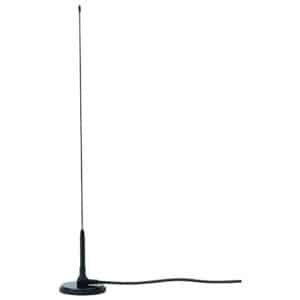
Nagoya UT-72G
A tuned magnetic-mount antenna that turns the MURS-V2 into a practical license-free vehicle setup.
$34.89
BTECH UV-50PRO 50W Dual Band Mobile Ham Radio
50-watt dual-band mobile operation for vehicles, base stations, and repeater access.
$329.89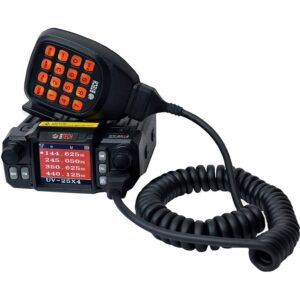
BTECH UV-25X4 (Second Generation) Tri Band 25W Mobile Radio
A quad-band 25-watt mobile platform for licensed operators who value band flexibility.
$124.89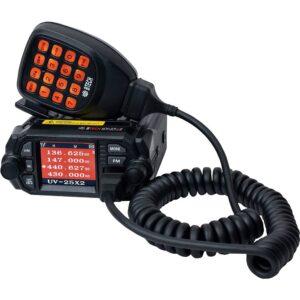
BTECH UV-25X2 (Second Generation) Dual Band 25W Mobile Radio
A compact 25-watt dual-band mobile for licensed vehicle and base operation.
$124.89
BAOFENG BF-F8HP PRO 10W Tri Band Two-Way Radio, IP54, 1000 Channels, GPS, Aviation RX, USB-C
High-power tri-band handheld with GPS and USB-C for licensed operators.
$62.89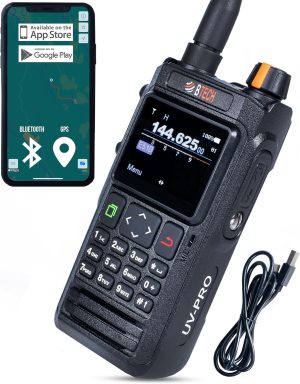
BTECH UV-PRO GPS, Bluetooth & APRS Dual-Band Radio
IP67, GPS, Bluetooth, and app programming in a versatile dual-band platform.
$164.89
BTECH DA-7X2 Digital & Analog Dual Band Two-Way Radio
Digital and analog operation for users who need an advanced repeater-capable handheld.
$299.89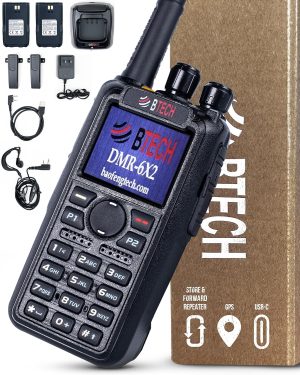
BTECH DMR-6X2 DMR & Analog Dual Band Two-Way Radio
Digital and analog capability for managed handheld, vehicle-with-external-antenna, and repeater-connected deployments.
$189.89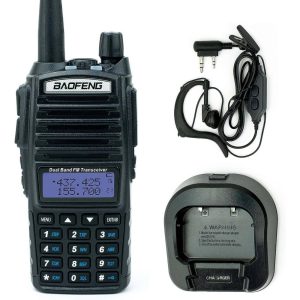
BaoFeng UV-82C
A commercial dual-PTT endpoint that can move from handheld use to an authorized vehicle setup with a properly tuned external antenna.
$55.89No exact current BTECH model matches this hardware path. Browse the complete service collection for additional options.
Why this is realistic: the result uses the weaker two-way direction, then caps it at the radio horizon. Equal high elevations do not automatically help; the model uses relative site advantage because a hill matters only when it clears the terrain between stations.
How it calculates: the result solves the weaker direction of a two-way link budget using transmitter power in dBm, both antenna systems, equipment/body loss, VHF/UHF frequency, an environment-specific path-loss coefficient, and explicit planning margin. Free-space loss follows ITU-R P.525-5; short outdoor and indoor assumptions are informed by ITU-R P.1411-12 and ITU-R P.1238-13. Because the indoor recommendation begins at 300 MHz, its use for MURS is a cautious extrapolation rather than a standards claim. “Plan around” carries more margin than “favorable path”; both stop below the radio-horizon ceiling. This browser-only estimate has no terrain profile, building plan, local-noise measurement, or antenna pattern, so it is not Longley–Rice/ITM analysis, an RF site survey, or a coverage guarantee. Test the hardest locations before a critical or multi-unit deployment.
THE FIVE RANGE TRUTHS
What actually determines two-way radio range?
The service name does not create a mileage number. The complete radio path does.
Antenna height opens the path.
Height can clear roofs, vehicles, trees, and terrain. For VHF and UHF, moving an antenna upward often helps more than adding transmitter watts.
Obstructions spend signal.
Concrete, steel, hills, dense foliage, and being inside a vehicle can consume the link budget. One obstacle can matter more than several miles of open space.
VHF and UHF behave differently.
VHF is often favored for open outdoor and rural paths. UHF supports compact antennas and is common around buildings. Neither band defeats poor placement.
Power is margin—not magic.
Ten times the transmitter power does not mean ten times the distance. Power can strengthen a marginal path, but it cannot remove a mountain or raise an antenna.
A repeater changes the geometry.
A properly sited repeater receives and retransmits from a higher, better location. Its antenna site and system design—not the word “repeater”—create the coverage.
FAST ANSWERS BEFORE YOU BUY
Get to the right radio faster.
Start with the decision closest to yours, then open any practical answer below. No jargon maze and no inflated mileage promises.
Should I buy GMRS or FRS radios?
Choose FRS when you want the simplest ready-to-use handhelds with no individual license application. Choose GMRS when a licensed individual and qualifying family need more equipment choices, mobile or base radios, or repeater capability. Neither label guarantees more range—the actual radios, antennas, terrain, and placement still decide the path. See the current $35 GMRS license steps →
What should a business or organization use?
For straightforward short-range teams, compare compliant FRS and MURS equipment. For organization-managed channels, larger sites, repeaters, or coordinated operations, review an authorized PLMR system. GMRS uses an individual and qualifying-family licensing model; it is not a general workforce license.
Will radios cover my warehouse, hotel, farm, or large property?
There is no useful answer from square footage alone. Measure the farthest actual radio path, count floors between users, and identify concrete, steel racks, machinery, hills, or dense trees. Use the Range Lab’s building planner for a starting estimate, then test the hardest locations before a larger deployment.
Do I need a repeater?
Direct radio-to-radio operation is usually the simpler choice when users are close and the path is reasonably clear. A properly authorized repeater becomes valuable when a higher site can see areas that field radios cannot reach directly. GMRS, Amateur, and authorized PLMR systems can support repeaters; FRS and MURS cannot.
Which radio service has the longest range?
No service guarantees a mileage number. Antenna height, terrain, structures, interference, equipment limits, and repeater infrastructure matter more than the service name. Compare the services for licensing and operating fit, then use the Range Lab to model the actual path.
Should I choose VHF or UHF?
VHF is often a strong choice for open outdoor, rural, and some large-facility paths. UHF is common around buildings and supports compact antennas. Neither band defeats poor placement, heavy construction, or blocked terrain, so choose based on the environment and the equipment you are authorized to use.
Does a 50-watt radio go ten times farther than a 5-watt radio?
No. Ten times the transmitter power adds 10 dB to the link budget; it does not create ten times the distance. Extra power can strengthen a marginal path, but antenna height, feed-line loss, receiver performance, and obstructions frequently matter more.
Will a better or higher antenna help more than additional power?
Often, yes. A more efficient antenna placed higher and in the clear can improve both transmitted and received signals, while added transmitter power helps only one direction. Equipment and service rules may restrict antenna type, height, or effective radiated power, so use a legal antenna system designed for the selected frequencies.
Why do radio boxes advertise 20, 30, or 50 miles?
Those figures usually describe unusually favorable elevated line-of-sight geometry—such as hilltop to valley—not ordinary handheld use inside a neighborhood, warehouse, vehicle, or forest. Treat them as best-case demonstrations, not expected everyday coverage.
Does digital radio automatically have more range?
No. Digital can preserve clear audio deeper into a weakening path, while analog becomes progressively noisier. Digital also reaches a sharper failure point. The RF path, antennas, receiver performance, and system design still determine usable coverage.