
 Orders ship from the USA, Orders of $25 or more qualify for FREE Shipping in the USA
Send DMR text messages and use Text Capture
The short version
Prove radio-to-radio text before you add the network
Create a destination with the correct numeric ID and call type. Choose the format the receiving path expects, then send one short message on an authorized DMR channel. If simplex works but the network path fails, the radios may be fine.
On supported firmware, Text Capture helps with certain network-formatted messages. It is not a universal translator: a radio, hotspot, repeater, or network can still delay, alter, or reject the message.
Models covered
All three support DMR text; interoperability remains path-dependent
Firmware, SMS format, destination type, repeater/hotspot support, and network routing must align. Never treat a sent indication as delivery confirmation.
Compare models and required versions
| Model | Verified procedure | Required version | Important difference |
|---|---|---|---|
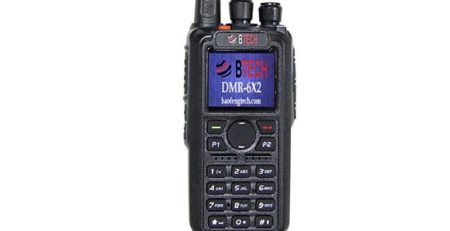
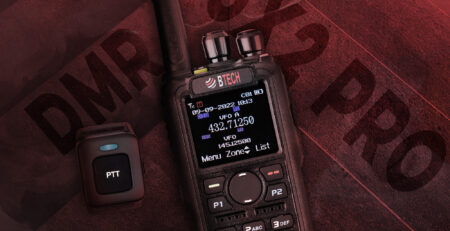
| DMR-6X2 | Radio SMS and Text Capture | Firmware 2.10 or later for Text Capture | Format and network behavior are model/firmware-specific. |
| DMR-6X2 PRO | Radio SMS and Text Capture | Firmware 1.10 or later for Text Capture | Use PRO CPS and message settings. |
| DA-7X2 | Radio SMS/text workflow | Current DA firmware/CPS | DA message menus and dual-receiver behavior differ; no assumption of universal network delivery. |
Test each part of the message path
-
Create the receiving Radio ID contact
Add the exact recipient numeric ID with the correct call type. A friendly name does not change the destination.
-
Use a known working DMR channel
Confirm voice or normal signaling on the exact frequency/color-code/slot path before adding text.
-
Choose the required text format
Use the model/network setting documented for the receiving radio or system. Text Capture is a compatibility feature, not an automatic universal translator.
-
Send a short direct/simplex message
When possible, test two authorized radios directly. Confirm the receiving radio stores/displays the text and compare any sent/received acknowledgment.
-
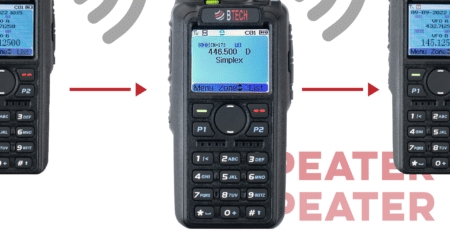
Test the repeater or hotspot path
Send one new short message through the intended system. If direct works but the network test does not, inspect network routing and format before changing the codeplug.
-
Confirm content and direction
Verify the recipient sees the complete message and correct sender ID. Do not assume a sender-side success screen means the far end received it.
Troubleshooting
| What happened | Likely reason | Next check |
|---|---|---|
| Message stays in the sent box only | No acknowledgment or network delivery route | Verify recipient ID/call type and test direct/simplex before troubleshooting the network. |
| Direct text works; repeater text fails | Repeater/hotspot/network lacks routing or expects another format | Check current system documentation and Text Capture/SMS format settings. |
| Recipient sees gibberish or an empty message | Format/encoding mismatch | Use a short ASCII test, select the documented SMS format, and compare exact firmware. |
| Wrong station receives the text | Destination ID or call type is wrong | Stop, verify the numeric destination, and correct the contact/channel before sending again. |
| Text fails after roaming | The new site does not carry the same data service | Test the current repeater path directly; roaming does not guarantee text-service equivalence. |








Leave a Reply